Your NAS Doesn't Need More RAM. It Needs a Ledger.
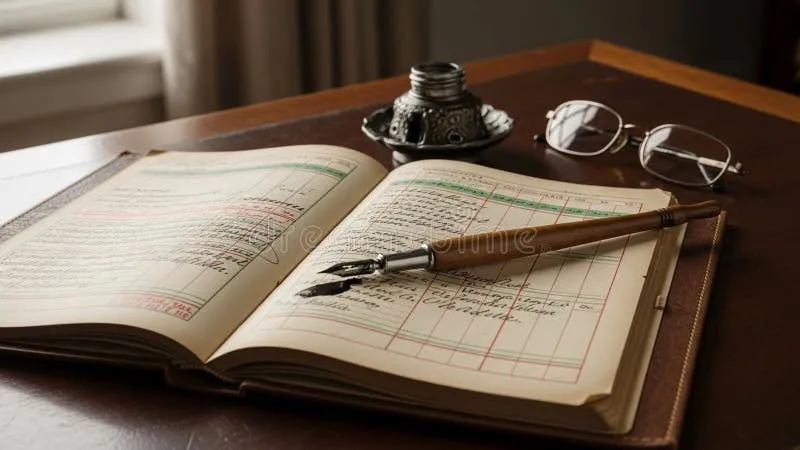
Photo: handwritten notebook ledger next to a small home server on a wooden shelf, via thumbs.dreamstime.com
There's a particular American ritual that plays out on every homelab forum from Portland to Pittsburgh. A builder posts their NAS: four bays, ECC memory, a chassis milled like a Swiss watch. The specs are immaculate. The documentation is a single comment: "ask me anything."
Meanwhile, somewhere in Tampere, a Finnish tinkerer has just labeled a shoebox-sized server "Aino" with a strip of painter's tape, written its purpose in a notebook, and placed it on a shelf with the same deliberateness you'd reserve for a piece of furniture. Guess which machine is still running in eight years.
The Spec Sheet Is Not the Story
We've been trained to believe that commitment to a device is measured in its components. More RAM equals more love. A 10GbE NIC is a love letter. But specs describe what a machine is; they say nothing about what it's for, or who it belongs to, or why it exists in your hallway closet instead of someone else's.
This is the gap between American tinkering culture and the Nordic version of it. We optimize. They contextualize. And context, it turns out, is what makes you maintain a thing.
Enter the Talous
The Finnish word talous translates roughly to "household" or "economy," but its deepest roots are in the talouskirja — the household ledger. For generations, Finnish families kept meticulous written records of what the household owned, owed, produced, and consumed. Grain, firewood, debts, the good axe that belonged to Grandpa. The ledger wasn't bureaucracy. It was a declaration: these things are ours, they have a place, and they will be accounted for.
A ledger is a promise with a pencil attached. Once the firewood is written down, you don't forget the firewood. Once the server is written down — named, dated, given a purpose — it stops being a pile of parts and starts being a resident.
Psychologists have a cousin of this idea called the IKEA effect: we value what we build. But building only gets you through the honeymoon. The ledger is what gets you through year three, when the fan starts whining and the temptation to "just buy a Synology" whispers sweet nothings.
How to Ledger Your NAS
Here's the practice, adapted for an American garage and a Finnish temperament.
1. Name it like it's staying. Not "NAS2" or "bigbox." Give it a real name — a Finnish one if you want the full effect. Aino, Väinö, Sisu. You will not casually decommission something named Väinö. That's the point.
2. Give it a name plate. A printed label, an engraved brass strip, a Brother P-touch if you must. Include the name, the build date, and its duty: "Aino — Family Photos & Backups — est. 2024." This is the furniture effect from our firmware article, applied to storage.
3. Start the ledger. A paper notebook beats a wiki here, because paper doesn't have a database to migrate. Record: what drives went in and when, what services it runs, every intervention. Failed drive in March 2026? Ledger. Replaced the PSU? Ledger. It's a medical chart for a machine you intend to keep alive.
4. Give it a place, not a spot. In Finnish design, everything has a designated location, and the location has a reason. Your NAS shouldn't live "wherever fit in the closet." It lives on the second shelf because that shelf has airflow and the UPS outlet is right there. Write the reasoning in the ledger. Future-you will thank present-you in a way that present-you cannot imagine.
5. Schedule the sauna. Finnish households maintain on a rhythm, not on a crisis. Pick a date — say, the first Sunday of each quarter — for a check-in: SMART data, dust, drive health, a read-through of the ledger. Fifteen minutes. Then close the book and go outside.
Why the Ledger Outlasts the Honeymoon
The eight-month abandonment rate of homebrew NAS builds isn't a hardware problem. It's a narrative problem. A build with no story is just a cost center that hums. When the first drive clicks ominously at month nine, the spec-driven builder does the math and walks away. The ledger-driven builder checks the chart, sees Aino survived a similar scare in year two, orders a replacement, and writes it down.
That's not sentimentality. That's maintenance infrastructure made of paper and emotion — the two materials Americans consistently undervalue.
So before you drop another $400 on capacity you don't need, spend $4 on a notebook and a label maker. Name the machine. Date the machine. Give it a shelf with a reason.
Your data deserves a custodian. Väinö is applying for the job.