Self-Checkout Confidential: What's Actually Inside That $200 Dead Kiosk From Facebook Marketplace
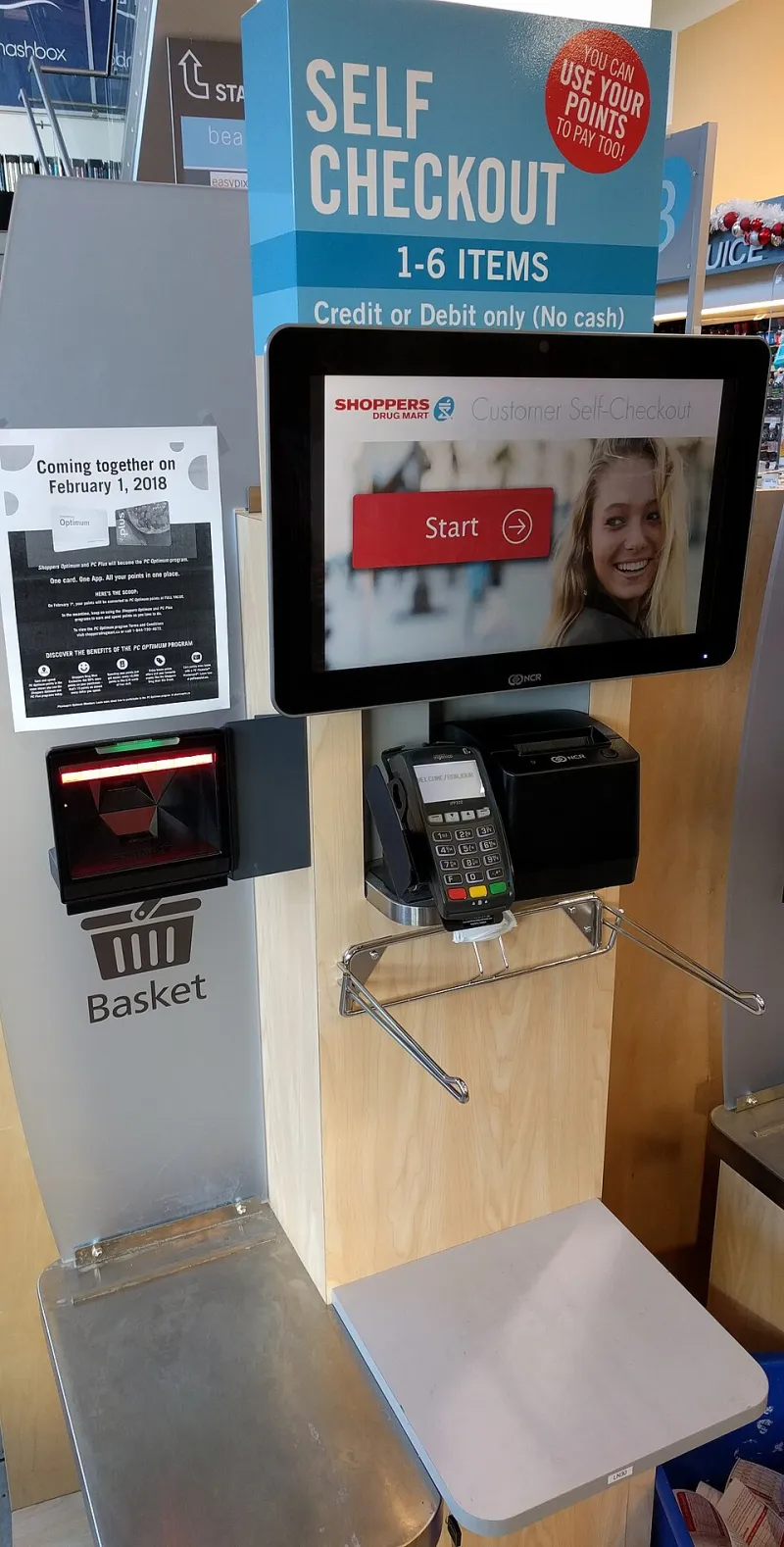
Photo: Daylen, CC BY 4.0, via Wikimedia Commons
The Listing Said 'For Parts, Probably'
There's a specific genre of Facebook Marketplace listing that appears when a grocery chain upgrades its fleet: a photograph of a self-checkout terminal leaning against a dumpster, priced at $200 or best offer, described only as "heavy." No model number. No power supply. One blurry image taken at dusk, as if the seller feared the machine might notice.
We bought it. Of course we bought it. A kiosk is just a computer that was told it could never quit retail, and we at Finnputer believe every machine deserves a second act that doesn't involve asking someone if they have a store loyalty card.
What's in the Brick
Ours turned out to be a mid-2010s NCR unit, the kind that spent eight years getting punched by people angry about apples. The teardown, in order of discovery:
- A fanless industrial motherboard — a dual-core Celeron on a mini-ITX-style board with a full-height PCIe slot. Retail hardware is specced for 100,000 hours of operation, which means your "dead" kiosk is likely fine. It just got retired for being slow to boot, not slow to exist.
- 4GB of DDR3 SODIMM and a 64GB industrial SSD — the SSD has a wear indicator and ours showed 3% used. Retail barely writes anything. Your media library will be a workload explosion by comparison.
- A 15-inch ELO resistive touchscreen, USB, with a serial fallback. Resistive, not capacitive. It works with gloves, with a screwdriver, with a sausage. This is a feature.
- A thermal receipt printer with a standard 80mm mechanism. Keep this. Receipt printers are the universal donors of the maker world and replacement parts are cheap.
- A 300-watt PSU in a proprietary cage — the one genuinely annoying part. Ours was an ATX variant with a swapped connector, so a $10 adapter board and a dremel got us standard power.
- A 12V rail, four USB ports, an Ethernet jack, and a mysterious 6-pin header that turned out to be for the external barcode scale. We left that one alone, respectfully.
The whole machine weighs about 90 pounds, most of it a steel chassis designed to survive a shopping cart collision. Finnish design philosophy would call the internals redundant and the frame sensible. American retail design philosophy would call the whole thing a branding opportunity, which is why the shell is 40% advertising bezel.
Salvage Before You Scrap
If you're only keeping one thing, keep the touchscreen. Working USB touch displays of this size go for $150+ new and yours is already mounted on an arm with cable management. Second priority: the receipt printer, then the speaker (genuinely good, tuned for voice prompts in noisy rooms), then the little LED status bar that makes a fantastic build indicator.
Scrap the card reader housing and the bill acceptor unless you enjoy owning a small safe that only accepts exact change.
The Reflash: From Loyalty Card Interrogator to Workshop Dashboard
The goal: a always-on shop terminal showing our project tracker, inventory spreadsheet, a live camera feed of the soldering station, and a weather radar, because every workshop needs a weather radar.
Step 1 — Get in. The BIOS was locked with the retailer's default password, which was, and we are not making this up, on a wiki. Ten seconds of searching. If yours resists, the CMOS battery is under the RAM shield and pulling it for five minutes resets everything.
Step 2 — Pick an OS. Debian with a lightweight window manager, or if you want the appliance feel, DietPi. The Celeron handles either without complaint. Skip anything with a desktop environment; you're building a machine with one job.
Step 3 — Kiosk mode. Chromium in --kiosk mode pointed at a local dashboard (we used a plain HTML page pulling from Home Assistant and a Google Sheets inventory via a small script). Add xset s off and xset -dpms so the screen never sleeps, and a systemd service so it comes back after power blips — because it will come back after power blips, this thing has a watchdog BIOS that treats outages as a personal challenge.
Step 4 — Touch calibration. Resistive panels sometimes need xinput_calibrator after a fresh install. Two minutes, done. Now the sausage works as a pointer.
Step 5 — De-brand. This is the Finnish part. Peel every sticker. Unbolt the advertising bezel — it's usually just clips — and either remove it or fill it with something honest: a shelf for tools, a print of a Finnish lake, whatever. What remains should be a screen, a printer, and a box doing exactly one job without commentary. A kiosk stripped of commerce is basically a very determined picture frame with opinions about your inventory.
Total Damage
Kiosk: $200. Power adapter: $10. SSD upgrade (optional): $30. Afternoon of labor and one skinned knuckle from the bezel clips: priceless, in the sense that we can't invoice for it.
For that you get an industrial-grade touchscreen terminal that will outlive several Raspberry Pis, a receipt printer for your project logs, and the deep satisfaction of watching a machine that spent its life nagging customers now silently displaying your humidity readings.
The corner store's loss is your workshop's gain. Sisu applies to hardware, too — the kiosk never stopped working. It just needed someone to let it.