Your Desk Is a Rock Concert and Nobody Bought Tickets: Running a Listening Audit on Your Own Setup
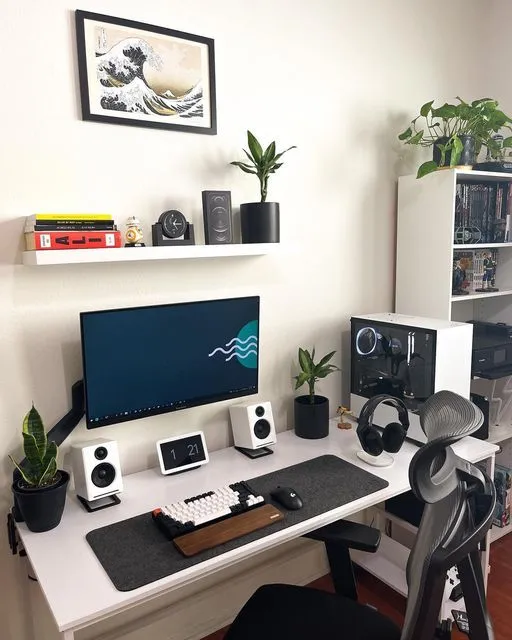
Photo: quiet minimalist desk setup with computer and headphones near window, via i.pinimg.com
The Moment I Realized My Desk Was Screaming
There's a library in Helsinki called Oodi. It's a gorgeous slab of curved glass and spruce that the Finns essentially built as a public living room, and when you walk into its main floor, something strange happens: nothing. No beeps, no hum, no one yelling into a Bluetooth headset about a fantasy football trade. It is so quiet that your own ears start filing noise complaints about you.
I came home to my desk in Ohio and heard my setup for the first time. Three RGB case fans spinning like a very small wind farm. A mechanical keyboard with clicky switches that sound like a woodpecker with a grudge. Discord pings, Slack pings, a phone that buzzes like it's trying to escape the desk. Individually, tolerable. Together? I wanted numbers.
So I built a listening audit rig. It cost less than a nice dinner, took an afternoon, and told me my "quiet" workspace sits at a steady 52 dB — roughly the loudness of a moderately animated conversation, running eight hours a day, aimed directly at my skull.
Why Your Ears Deserve Better Data
Here's the thing about noise: you adapt to it, which means you stop noticing it, which means you stop fixing it. Psychologists call it habituation. Your nervous system, meanwhile, keeps paying attention, quietly burning focus you'd rather spend on, say, not rewriting that regex for the ninth time.
The World Health Organization has been nagging about environmental noise for decades; below 30 dB is where most acoustic comfort guidelines for focused work land. Finnish design culture internalized this ages ago — silence up there isn't awkward, it's a feature, like a well-designed chair. American desk culture, by contrast, treats noise as ambience. We buy machines with fourteen RGB fans and call the result "minimalist."
Enough vibes. Let's get measurements.
The Rig: Four Parts, Zero Soldering
You will need:
- A measurement-grade USB microphone. The Dayton Audio EMM-6 or the miniDSP UMIK-1 are the hobbyist standards. A UMIK-1 runs about $80, but if you're cheap like me, a calibrated Dayton at $40-ish does the job fine. Yes, phone apps exist. No, your phone's microphone is not an instrument — it's a rumor of one.
- A cheap USB audio interface or just a spare USB port. The UMIK plugs straight in. Done.
- Open-source SPL software. On Linux,
soxwith a loopback, or the excellentpulseaudiomonitor trick. On anything else, REW (Room EQ Wizard) is free, cross-platform, and will graph your misery in glorious detail. - A notebook or spreadsheet. For the part where you judge yourself.
Set the mic roughly where your head actually is — not on the desk, not in the middle of the room. Your ears are the customer; measure where the customer sits.
Running the Audit: A Protocol for Paranoia
- Baseline. Everything on, doing what it normally does. Record 60 seconds in REW's SPL meter view. Note the average and the peaks. My average: 52 dB. My peak: 71 dB, courtesy of a fan ramping up when I opened 40 Chrome tabs like an amateur.
- The suspect lineup. Now subtract, one culprit at a time. Fans off — how much drops? Keyboard unplugged? Notifications silenced? Each removal gets its own 30-second reading. This is the audit's whole magic: it converts a vague feeling of "my desk is kind of loud" into a ranked list of具体的 villains. (That's Finnish for specific, probably. Don't check.)
- The events log. Every time you notice a sound, write it down with a timestamp for one workday. My log's highlights: 9:14 a.m., Slack knock sound, jump-scare rating 8/10. 2:37 p.m., laptop fan achieved liftoff during a Zoom call.
What I Found, and What You Probably Will
My rankings, yours will differ:
- Case fans: 6 dB of my life. A $15 undervolt and a fan curve that doesn't treat every compile like a runway takeoff fixed most of it.
- Keyboard: the biggest offender per event. Nobody hears 52 dB average; everybody hears 71 dB peaks. Tactile switches, not clickies. Or a desk mat, which is basically a muffler for your typing.
- Notifications: small in decibels, enormous in damage. Even silent ones yank your attention. Turn the pings into a single scheduled digest and your brain will send you a thank-you card.
Thirty minutes of fiddling got my average down to 38 dB. Not Oodi — Oodi is a cathedral and I own a GPU — but a different room entirely. The silence, once you've earned it, is weirdly addictive. Sounds start to feel like what they are: someone else's design decision, imposed on your afternoon.
The Finnish Lesson, Optionally Applied
You don't have to move to Helsinki. You just have to do what the Oodi's architects did: treat silence as a specification, not an accident. Measure it. Assign it a number. Defend it.
Build the rig. Run the audit. And when a friend asks why your PC fans whisper instead of roar, tell them it's not a build — it's a library card.