The Cable Nest Under Your Desk Is Lying to You: A Nordic Intervention
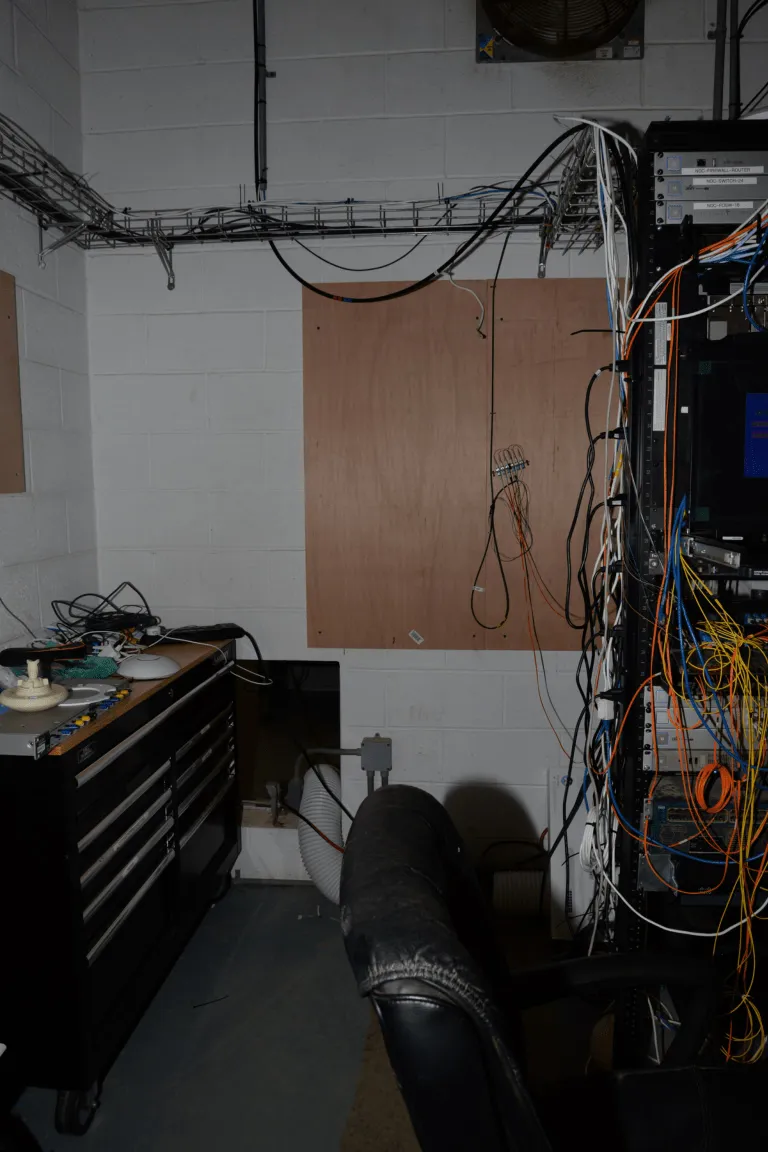
Photo: Federal Bureau of Investigation, Public domain, via Wikimedia Commons
Every tinkerer has one: the under-desk biome. A humid, shadowy ecosystem where a power strip mates with a USB hub, three stranded Ethernet cables dream of better lives, and something — something — is always warm. You've made peace with it. You've even named it, possibly.
We're here to tell you the truth your nest doesn't want you to hear: it's not ugly. It's slow. Every time you duck down to unplug the wrong adapter, trace a mystery cord, or knock your dock loose reaching for an outlet, you're paying a tax. Cable clutter is a productivity problem disguised as an aesthetics problem, and Americans in particular love to treat it like a decorating issue — buy a matching sleeve, hide it in a box, problem solved. It is not solved. It is concealed, which is the opposite of solved.
So let's borrow from a country that has spent a century making small spaces work: Finland.
Principle One: Function First, Feelings Later
Finnish design — the Marimekko poppies, the Iittala glassware, the humble sauna bench — never starts with "how does this look?" It starts with "what does this do?" A thing earns its place by working.
Apply that to your desk audit. Pull every cable out from under there (yes, all of them; take a photo first if you're a coward) and interrogate each one like airport security:
- What does it connect? If you can't answer in five seconds, it's a suspect.
- How often do you unplug it? Daily-use cables belong in the "flex zone" — routed with slack and reachable. Never-touched cables belong in the "buried zone," velcroed into flat looms and forgotten.
- Is it doing a job a different cable could do better? One good USB-C cable can replace the three sad, half-spec'd ones it's been squatting with.
This is a product-agnostic exercise. We're not going to tell you to buy a $90 oak cable tray, because Finnish design would never. A $4 pack of velcro ties and a handful of adhesive clips from any hardware store will outperform most "desk organization systems" sold to Americans who watched one video at 2 a.m.
Principle Two: Lagom's tougher Nordic Cousin — Enough Is Enough
Our site has a whole philosophy named after this (see: the quiet PC manifesto), but it bears repeating at the desk level. The Finns have sisu, the stubborn endurance, but the design culture runs on restraint. You don't add a second lamp when one works. You don't keep the toaster that doesn't toast.
Your cable drawer is a museum of someday. The HDMI-to-VGA adapter "in case the projector situation changes." The spare micro-USB cables, kept alive out of nostalgia for a phone that died in 2016. Keep a small graveyard box — one shoebox, honestly — and when it overflows, donate or recycle. The rule isn't minimalism for its own sake. The rule is: every cable you keep must pay rent.
Principle Three: Route Like an Architect, Not a Collector
Once you've culled, build the system:
- Anchor the power. Mount the power strip under the desk lip or to the wall, not on the floor where your feet and spilled coffee live. Everything plugged into it gets a velcro wrap at the strip.
- Separate the traffic. Power on one side, data on the other. Cross them at 90 degrees if you must. Your Wi-Fi router's Ethernet port will thank you in ways you can't measure but can feel.
- Give slack a home. Excess cable gets coiled and velcroed, never wound tight around anything — tight coils are how cables learn resentment (and internal breakage).
- Label like you'll forget, because you will. A strip of masking tape and a marker beats any label maker. Write what each cable does at both ends. Future you, crouched under the desk at 11 p.m., will experience something close to grace.
The before/after of a good cable job isn't glamorous — it's a flat, dark, quiet loom running along one edge of the desk. It looks like nothing. That's the point. In Finnish design, the highest compliment a solution can earn is that you stop noticing it.
The Opinion Part You Were Promised
Here's the argument we'll defend in the comments: your cable mess costs you more than it looks like it does. Not in dollars — in micro-friction. Every untraceable cord, every wrong-plug shuffle, every time the desk shifts and something disconnects, you're burning the exact kind of tiny, unnecessary cognitive effort that makes an evening tinkering session feel like work. Tinkerers optimize compile times and keyboard actuation forces and then crouch into a nest of nine unlabeled cables to plug in a webcam.
Finnish culture has a word for unnecessary fuss — it roughly translates to "why are you doing all that." Your desk deserves the same question.
Untangle it. Wrap it. Anchor it. Then get back to the projects that matter, in a workspace where nothing hums, snarls, or bites — except, of course, the soldering iron. That one's earned its keep.